What to Eat in October: Seasonal Foods & Easy Meal Ideas
Table of Contents
ToggleSimple Everyday Ideas for What to Eat in October
Not sure what to cook as fall settles in? Discover what I eat in October, which seasonal fruits and vegetables I choose, and how I turn them into simple meals for a busy week. You’ll also find a practical grocery list, easy meal prep ideas, and 15 quick food combinations for days when you don’t have much time to cook.
October is the month when the way we cook really begins to change. Mornings are cooler, the days are getting shorter, and almost without realizing it, the quick salad that felt perfectly satisfying in August is no longer always the first thing that comes to mind when we get home. We start craving warm food. A creamy soup. A steaming tray fresh from the oven. Baked apples with cinnamon. A warm bowl made with just a few simple ingredients.
And one question inevitably comes up: what do I eat in October if I want to make the most of seasonal foods without spending every evening in the kitchen? Especially after 35, when your schedule may include work, family, grocery shopping, errands, appointments, and countless things that need your attention before you even start thinking about dinner.
The last thing you need is a meal plan that adds yet another obligation to your day. That’s why we’re not going to turn October into a marathon of complicated recipes. We’re going to do exactly the opposite. We’ll look at what’s in season, choose a handful of versatile ingredients, and turn them into simple meals for days when time is limited.
If you’re transitioning from September into cooler fall meals, you can also explore my guide to seasonal foods in September and its complete 7-day meal plan.
What To Eat in October: Start With What's in Season
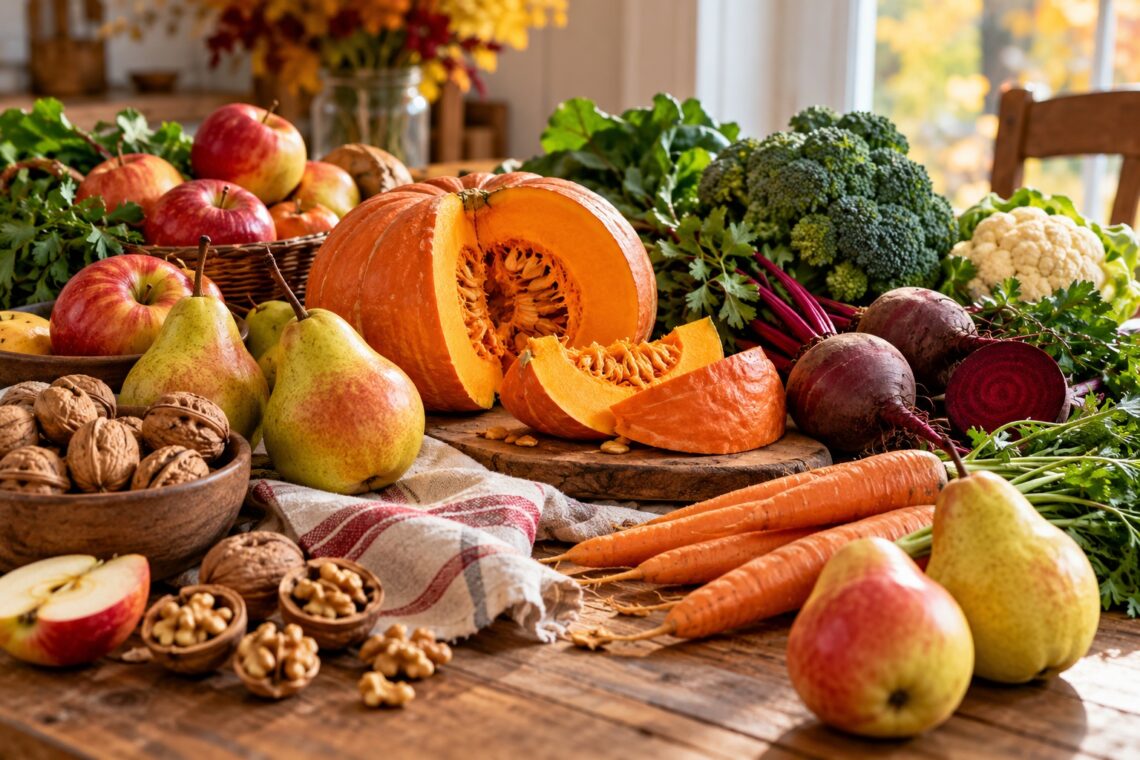
October is one of those months when it becomes surprisingly easy to build meals around ingredients rather than recipes. Pumpkin and squash, apples, pears, quinces, walnuts, cabbage, cauliflower, broccoli, beets, and root vegetables give us plenty of possibilities for creating varied meals without buying dozens of different foods.
Exactly what’s available will, of course, depend on your region, the weather, and the time of the month. But the principle remains the same: I don’t start by asking, “What recipe should I make?” I start by asking, “What good ingredients do I have available right now?”
It’s a small shift, but it can make meal planning dramatically easier. If you have pumpkin or winter squash, for example, you haven’t bought an ingredient for just one recipe. You’ve bought the foundation for several meals. One portion can become a creamy soup. Another can be roasted. A few cubes can go into a grain bowl with cheese and seeds. In the same way, apples can become a snack, breakfast, or dessert. Cabbage can become a salad, a side dish, or part of a warm meal. Beets can be roasted, added to a salad, or paired with cheese and walnuts in a hearty bowl.
This is one of the secrets to a practical fall kitchen: Don’t buy more ingredients. Buy ingredients that can do more.
Vegetables Worth Adding to Your Grocery Basket in October
If your refrigerator still holds plenty of summer color in September, October begins to noticeably change the palette. You’ll see more orange, deep red, rich green, and the earthy shades of root vegetables. Depending on what’s available locally, vegetables and plant foods you may find in October include:
- pumpkin and winter squash;
- cabbage;
- cauliflower;
- broccoli;
- beets;
- carrots;
- celery root;
- parsnips;
- parsley root;
- leeks;
- potatoes;
- onions;
- garlic;
- peppers, where they’re still available;
- various leafy greens and salads that tolerate cooler temperatures.
You don’t need to buy all of them. In fact, for a busy woman, that could be one of the first mistakes.
You see a market overflowing with beautiful produce, you love the idea of eating seasonally, and you come home carrying bags full of vegetables. Four days later, some of them are still sitting in the refrigerator and suddenly you’re racing against the clock: “What am I going to do with all of this before it goes bad?”
A better strategy is to choose four or five main vegetables for the week. For example:
pumpkin + broccoli + beets + carrots + leeks
The following week:
cauliflower + cabbage + pumpkin + carrots + potatoes
You don’t have to eat the entire fall season in a single week.
Pumpkin: The Ingredient That Can Do Much More Than Make Soup
It’s hard to talk about what I eat in October without mentioning pumpkin and winter squash. But pumpkin doesn’t have to be limited to the classic creamy soup. It can be one of the most versatile ingredients of the month. Cut it into cubes and roast it.
From that point on, you have several possibilities. Serve it alongside meat, fish, tofu, or legumes, depending on what you eat. Add it to a bowl with rice or bulgur, cheese, seeds, and fresh herbs. Turn it into a creamy soup. Use it in certain breakfast dishes. Or combine it with other vegetables on a large sheet pan and roast everything together. The key is not to roast two tiny pieces just for that evening’s dinner.
If you’re already turning on the oven, prepare a larger batch and give that pumpkin two or three different destinations. That’s how you start cooking for the week without feeling as though you’re doing traditional “meal prep.”
Cabbage, Cauliflower, and Broccoli: Three Ingredients Worth Rediscovering
Some vegetables don’t look particularly exciting when you put them in your shopping basket, but they’re incredibly useful during a busy week.
Cabbage is a perfect example. It can become a crunchy salad alongside your main dish, it can be cooked, or it can be incorporated into a variety of warm meals.
Cauliflower can be roasted, turned into creamy soup, or served as a side dish.
Broccoli cooks quickly and pairs well with eggs, pasta, rice, cheese, and a variety of protein sources.
These are exactly the kinds of ingredients I want in my refrigerator when I’m wondering what to eat in October but don’t feel like searching for yet another complicated recipe.
Root Vegetables: The Ingredients That Make Fall Easier
Carrots, beets, celery root, parsnips, and other root vegetables are especially useful at this time of year. And not just for soup. You can roast them. Turn them into creamy soups. Combine them into simple side dishes.
Roasted beets, for example, pair beautifully with cheese, walnuts, and fresh greens.
Roasted carrots can be added to a warm bowl or served alongside your main dish.
And when you have several root vegetables that need to be used, one large sheet pan can solve the problem with very little hands-on effort.
That’s a good rule for October: Let the oven work while you do something else.
October Fruit: Snacks That Don't Need a Recipe
If October vegetables help us build lunch and dinner, fruit gives us some of the easiest options for breakfast, snacks, and dessert.
Apples are the obvious stars. Then come pears, grapes, quinces, and other fruits depending on where you live and what’s available at that point in the month.
Here, I use the same rule I use for vegetables: I don’t buy small amounts of seven different fruits simply because they’re in season. I choose two or three. That’s enough.
If you have apples, pears, and a few walnuts at home, you already have plenty of options for the week. An apple can go straight into your bag. A pear can be added to a bowl of yogurt. Sliced apples can top your oatmeal. And when you want something warm on a chilly evening, a baked apple with cinnamon can completely change the mood without requiring an elaborate dessert.
Apples: Probably the Most Practical Fruit of the Month
Apples have one huge advantage for anyone with a busy schedule: They’re portable. You don’t need a container. You don’t need utensils. You don’t need to prepare them the night before. Wash one and take it with you.
But it would be a shame to stop there. You can pair apples with:
- yogurt and walnuts;
- oatmeal and cinnamon;
- fresh cheese;
- peanut butter or another nut butter, if you eat it;
- seeds;
- or simply bake them.
This way, one fruit can appear in several different meals and snacks without making everything feel repetitive.
Quinces: That Fragrance That Tells You Fall Has Arrived
Quinces are one of those ingredients we instantly associate with fall. They’re fragrant and firm, and they’re not quite as convenient for the “grab a piece of fruit and run out the door” strategy as apples or pears. But that’s exactly why they can play a different role.
Depending on your preferences, you can use them in cooked dishes, compotes, or simple desserts.
You don’t need to buy an entire bag just because they’re in season. Two or three may be more than enough if all you want is to bring their distinctive fall aroma into your October kitchen.
My Grocery List for One Week in October
Now we get to the part that turns information into something genuinely useful. Because you can know every seasonal food available and still find yourself standing in front of the refrigerator on Wednesday evening with no idea what to eat. The problem isn’t necessarily that you don’t have food. It’s that you don’t see the combinations. That’s why, when I decide what I eat in October, I try to buy ingredients that naturally work together.
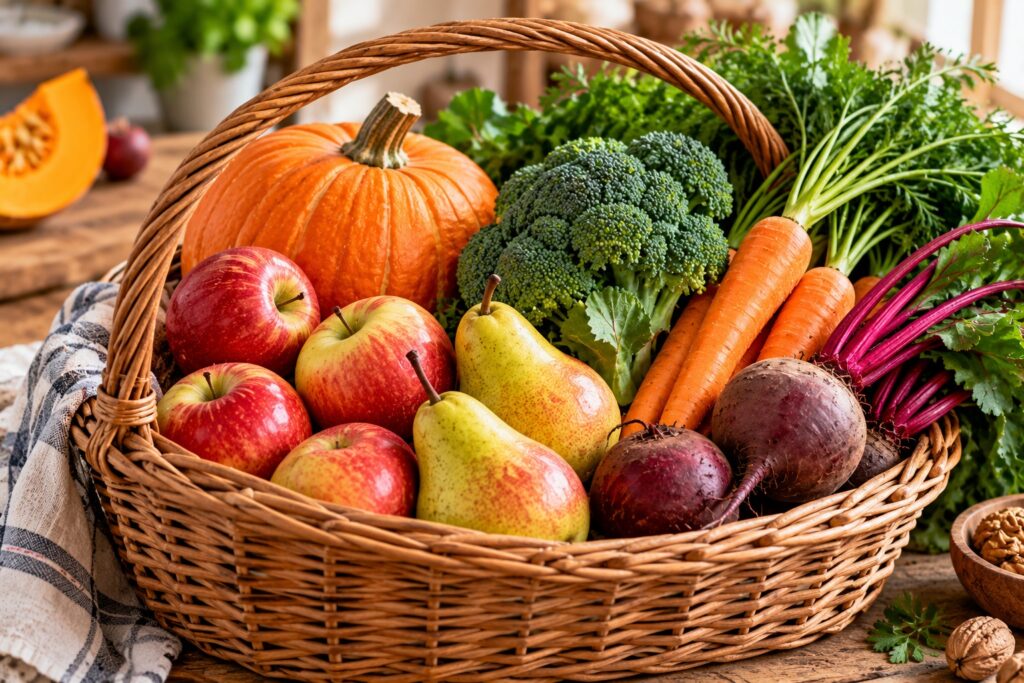
A sample grocery basket for one week might include:
- pumpkin or winter squash;
- broccoli or cauliflower;
- carrots;
- beets;
- leeks;
- apples;
- pears;
- eggs;
- plain yogurt;
- a favorite cheese;
- one or two additional protein sources, depending on your preferences;
- oats;
- rice, bulgur, quinoa, pasta, or other grains;
- whole-grain bread or wraps;
- walnuts and seeds;
- lemon;
- garlic;
- fresh herbs;
- olive oil and your favorite seasonings.
This isn’t a prescription or a rigid meal plan. It’s a starting point. If you don’t like beets, don’t buy them just because it’s October. If your family loves cauliflower, buy more and use it in two different meals. Seasonal eating should make your life easier, not create another set of rules.
The “One Ingredient, Three Meals” Rule
If I had to keep just one grocery-shopping rule for a busy woman, this would probably be it. Before buying a larger quantity of an ingredient, I ask myself: “Can I use this in at least three different ways?”
Pumpkin?
Yes.
Meal 1: roasted pumpkin alongside the main dish.
Meal 2: creamy pumpkin soup.
Meal 3: a bowl with pumpkin, grains, cheese, and seeds.
Broccoli?
Meal 1: a quick side dish.
Meal 2: an omelet or frittata.
Meal 3: pasta with broccoli and cheese.
Apples?
Meal 1: oatmeal with apples and cinnamon.
Meal 2: an apple and walnuts for a snack.
Meal 3: baked apples.
Beets?
Meal 1: roasted beets as a side dish.
Meal 2: salad with beets, cheese, and walnuts.
Meal 3: a grain bowl with beets and a protein source.
Once you start thinking this way, your grocery list becomes shorter while the number of possibilities actually grows.
What Do I Cook in October When I Don't Have Time?
This is where we get to the real test. It’s easy to talk about healthy eating when you have two free hours. But what do you do at 7:15 on a Tuesday evening? You’ve had a full day, you still have things to take care of, and the last thing you want is to spend the next hour chopping, stirring, and washing dishes.
On days like these, my answer to what do I eat in October? is very simple: I don’t always cook a meal. Sometimes I build one. I take a base, add a source of protein, some vegetables, and something that adds flavor. For example:
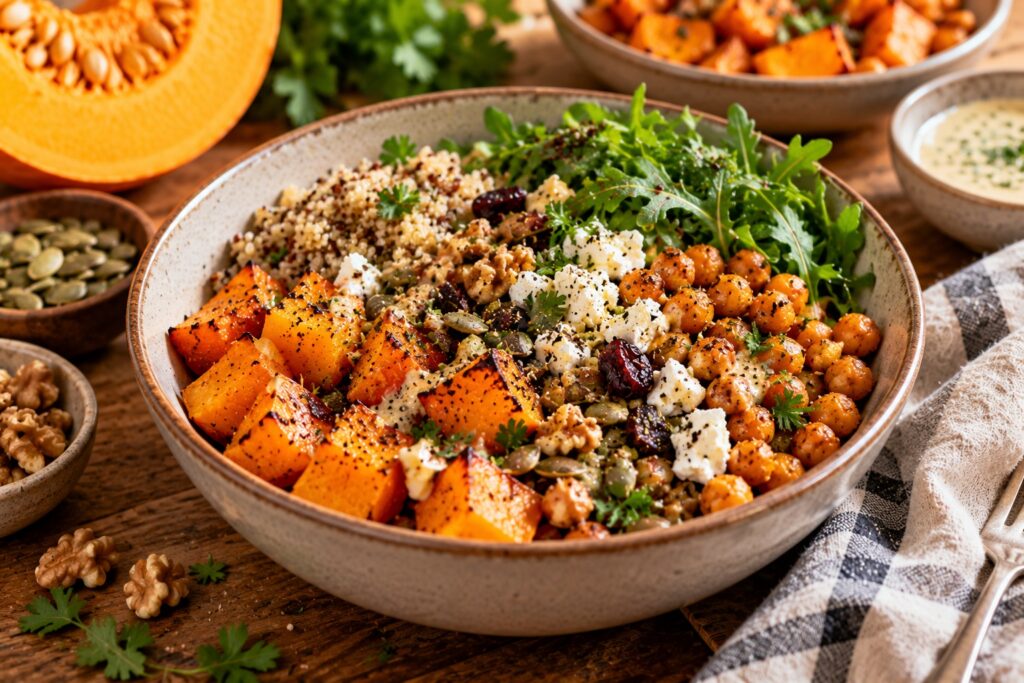
- rice + roasted pumpkin + chickpeas + cheese + seeds;
- bread + eggs + vegetables + a salad;
- pasta + broccoli + cheese + garlic;
- a wrap + hummus + roasted vegetables;
- creamy soup + toast + a protein source that fits my preferences.
Every dinner doesn’t need a sophisticated name. It simply needs to work for you.
Breakfast in 5–10 Minutes
October is the month when a warm breakfast starts sounding appealing again. Fortunately, “warm” doesn’t have to mean “complicated.” A few simple options:
- Oatmeal with apples, cinnamon, and walnuts.
- Yogurt with pear, oats, and seeds.
- Eggs with vegetables and toast.
- Oatmeal with roasted pumpkin, cinnamon, and walnuts, if you enjoy the combination.
- Toast with cheese and vegetables.
Need more quick morning inspiration? Here are 10 healthy breakfast ideas for busy women that are simple, balanced, and easy to fit into a hectic schedule.
You can rotate two or three options throughout the entire week. You don’t need seven different breakfasts. Smart repetition saves decisions.
And on a busy morning, sometimes it’s the decisions themselves that take up our time.
Lunch You Can Take to Work
For lunch, my favorite formula remains:
base + protein + vegetables + sauce or topping
For example:
- bulgur + roasted pumpkin + chickpeas + cheese;
- rice + broccoli + egg + seeds;
- quinoa + beets + cheese + walnuts;
- pasta + roasted cauliflower + a protein source + fresh herbs.
You don’t have to use these exact ingredients. The formula matters more than the recipe. Once you understand the formula, you can open the refrigerator and improvise with whatever you have.
A Simple Dinner After a Long Day
For especially busy evenings, I keep a few dinner ideas that require very little decision-making.
- An omelet with vegetables.
- Creamy soup prepared ahead of time.
- Roasted vegetables with a protein source.
- Pasta with broccoli.
- A wrap with hummus and vegetables.
- A warm bowl built from ingredients prepared on previous days.
And yes, sometimes dinner can be extremely simple. Not every meal needs to be a demonstration of culinary talent. For me, a good eating strategy isn’t one that looks flawless in a photograph. It’s one you can still follow on an exhausting Wednesday.
7 Days, 7 Ideas: What I Eat During an October Week
If you’d like to see how all of this comes together in real life, here’s an example.
This isn’t a diet, and it doesn’t prescribe portions or individual nutritional requirements. It’s simply an example of how the same ingredients can be reused intelligently.
Monday: I Start With a Large Sheet Pan
I roast pumpkin, carrots, cauliflower, and onion.
For dinner, I serve some of the vegetables alongside my chosen protein source.
The rest isn’t “leftover food.”
It’s tomorrow’s lunch already half prepared.
Tuesday: The Bowl That Almost Makes Itself
I add Monday’s roasted vegetables to rice or bulgur, along with a protein source and a simple yogurt sauce.
For dinner, I choose something quick: eggs with vegetables and toast.
Wednesday: The Soup That Saves the Evening
I use the pumpkin to make a creamy soup.
If I make a larger batch, I’ve already taken care of another meal too.
I serve it with toast and round out the meal according to my preferences.
Thursday: Beets, Cheese, and Walnuts
Roasted beets can become the base of a salad or a satisfying bowl.
I add cheese, walnuts, greens, and whatever other ingredients I need to make it a complete meal.
It’s one of those combinations that looks as though you put in far more effort than you actually did.
Friday: The Night I Don’t Want to Cook
Pasta with broccoli, garlic, and cheese.
Or a wrap with hummus and whatever vegetables are left.
Friday evening is not the time to win some imaginary cooking competition.
Saturday: I Let the Market Influence Part of the Menu
Saturday can be a good time to shop for the following week.
I look at what looks good and what’s available, but I don’t automatically buy it.
I ask myself:
“Do I know which three meals I’ll use this in?”
If the answer is yes, it goes into the basket.
Sunday: I Cook for My Wednesday Self
On Sunday, I prepare a few components—not seven days’ worth of complete meals.
A tray of vegetables.
A base such as rice or bulgur.
One or two protein sources.
A sauce.
Maybe a soup.
That’s it.
The goal isn’t to spend half of Sunday in the kitchen.
The goal is that when I open the refrigerator on Wednesday, I already have the beginning of dinner waiting for me.
October Meal Prep: One Hour That Can Change Your Entire Week
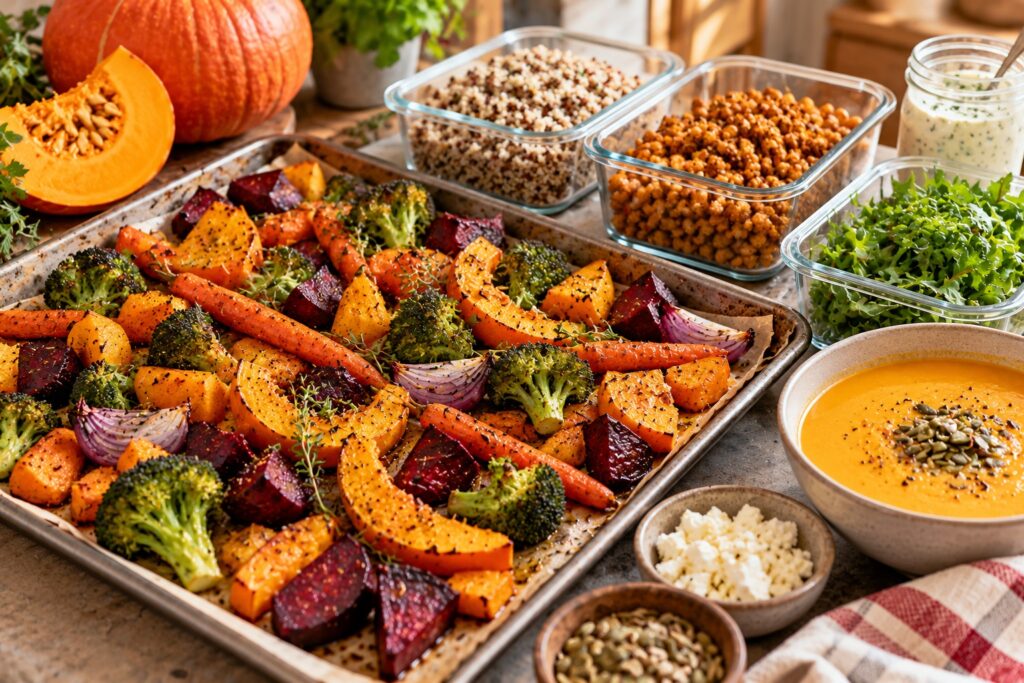
Meal prep doesn’t have to mean a refrigerator filled with identical containers. For me, the most efficient approach is preparing components rather than complete meals.
In about an hour, I can:
- roast a tray of vegetables;
- cook a grain;
- prepare one protein source;
- make a simple sauce;
- wash and organize a few ingredients for the days ahead.
Then, throughout the week, I mix and match.
Today, the roasted vegetables are served alongside the main dish.
Tomorrow, they go into a bowl.
The day after that, whatever is left can be added to an omelet or a wrap.
This way, I’m not eating the same meal from the same container for three days. I’m using the same ingredients to create different meals.
What I Prepare Ahead and What I Leave Until Mealtime
It makes sense to prepare in advance the things that require more time: roasted vegetables, certain grains, some protein sources, and perhaps a soup.
But you don’t need to prepare absolutely everything. Fruit can stay whole until you’re ready to eat it. Some salads are better when they’re made fresh. Eggs cook quickly. Bread can be toasted in just a few minutes. So instead of asking:
“How can I cook all my meals from Sunday through Friday?”
try asking:
“What can I prepare now that will save me 15–20 minutes on a busy day?”
It’s a completely different approach.
How I Buy Seasonal Foods Without Wasting Money
When we talk about what I eat in October, there’s one very easy trap to overlook. We can start confusing “in season” with “I have to buy it.”
The pumpkin looks wonderful. Apples are everywhere. Quinces smell incredible. Cabbage, cauliflower, beets, pears, and walnuts complete that perfect fall picture. But your refrigerator isn’t seasonal decor. If a food comes home without even one possible destination, there’s a risk that it will eventually become food waste.
That’s why, before I go grocery shopping, I don’t just make a list of ingredients. I make a rough outline of meals. It doesn’t have to be complicated. It’s enough to know that this week I want one soup, one tray of roasted vegetables, two lunches I can take to work, two very quick dinners, and a few breakfast options. Suddenly, grocery shopping has a purpose.
Shop for Meals, Not for a “Perfect” Refrigerator
Instead of writing: pumpkin, broccoli, beets, eggs, yogurt, rice…you can think:
Monday: roasted vegetables + protein.
Tuesday: rice bowl with leftover vegetables.
Wednesday: creamy pumpkin soup.
Thursday: vegetable omelet.
Friday: pasta with broccoli.
Now every ingredient has a purpose. And more importantly, some of them appear in several meals. That’s the difference between a grocery list and a grocery system.
What I Buy More Of—and What I Buy in Smaller Amounts
Not every food needs to be purchased in the same quantity.
Foods that store well and that you know you’ll actually use can be bought in slightly larger amounts.
Highly perishable ingredients, or foods your family rarely eats, are better purchased more cautiously.
My rule is simple:
I don’t buy based on how beautiful something looks in the store. I buy based on how realistic it is that we’ll actually eat it.
A bargain is no longer a bargain if half of it ends up in the trash.
October Is Also the Month When I Save a Little Fall for Later
October isn’t only about what we eat right now. It’s also a good time to preserve certain ingredients for the months ahead. That doesn’t mean you need to turn an entire weekend into a home-canning factory. Choose only what you know you’ll actually use.
What Is Worth Freezing
Depending on the ingredient and how you plan to use it later, freezing can be one of the simplest ways to preserve food. You can freeze certain vegetables after appropriate preparation, portioned herbs, sauces, or soups you’ve made in larger batches. The small-quantity rule works here too.
One serving of soup tucked into the freezer can save dinner on a busy November evening. You don’t necessarily need ten servings.
What Can Become Sauce, Zacuscă, or Other Pantry Staples
If peppers, sweet red peppers, eggplants, or suitable tomatoes are still available where you live, and you usually make preserves at home, October can still be part of your pantry-preserving season. But it isn’t mandatory.
Preserving food makes sense when your family will actually eat it. Otherwise, we’re simply moving potential waste from the refrigerator to the pantry shelf.
What I Simply Store Properly
Sometimes the best preservation method is to do nothing elaborate at all.
Some foods keep better than others when stored under the right conditions.
Before freezing, boiling, or transforming everything you’ve bought, ask yourself whether the food can simply be stored properly and eaten over the next few weeks.
15 Quick Combinations for Days When You Don't Know What to Cook
This is the list worth saving.
Because the problem isn’t always that we don’t have food in the house. Sometimes we have ingredients—we just don’t have ideas.
If you’re once again wondering what to eat in October, try one of these combinations:
- Roasted pumpkin + chickpeas + feta + seeds.
- Apple + yogurt + oats + walnuts + cinnamon.
- Roasted beets + cheese + walnuts + greens.
- Broccoli + pasta + garlic + Parmesan or another favorite cheese.
- Roasted cauliflower + hummus + flatbread + salad.
- Eggs + broccoli + cheese + toast.
- Pumpkin + rice + chickpeas + yogurt sauce.
- Pear + yogurt + walnuts + seeds.
- Roasted carrots + lentils + cheese + greens.
- Cabbage + carrot + your preferred protein + a simple yogurt dressing.
- Baked potato + broccoli + yogurt + cheese.
- Creamy pumpkin soup + toast + seeds.
- Rice + beets + egg + greens.
- Flatbread + hummus + roasted pumpkin + salad.
- Baked apple + cinnamon + walnuts + yogurt.
Notice something? None of these ideas starts with a list of 15 ingredients. The same foods appear again and again. That’s exactly the point. We don’t need a fuller refrigerator. We need to see more possibilities in the ingredients we already have.
The Mistake We Make When We Try to “Eat Seasonally”
There’s a risk of turning a simple idea into a rigid rule. “It’s October, so I have to eat only October produce.”
No. Seasonal eating doesn’t need to become a test that you either pass or fail. If you’re tired of restrictive food rules in general, you may also enjoy my 9 simple rules for eating without dieting, where I share a more flexible approach to balanced eating without an all-or-nothing mindset.
If you eat bananas in October, you haven’t “ruined” your seasonal eating.
If you use frozen vegetables on an evening when you don’t have time to cook, you haven’t failed.
If one morning you eat exactly the same breakfast you ate in July, the culinary calendar isn’t going to punish you.
Seasonal produce is a tool. It can help you add variety to your diet, discover different ingredients, build meals around what’s available, and enjoy the natural rhythm of the seasons. But it shouldn’t become another source of pressure. Especially if you’re a busy woman who already has enough on her plate.
What Do I Eat in October If I Only Have 15 Minutes?
This may be the most important question in the entire article.
Because there will be evenings when 15 minutes is all you have. On those evenings, don’t try to make up for all the meal planning you didn’t manage to do over the weekend.
Simplify.
Do you have eggs? Make an omelet and add whatever vegetables you have.
Do you have soup in the freezer?
Heat it up and add whatever else you need to round out the meal.
Do you already have roasted pumpkin and other vegetables? Turn them into a bowl.
Do you have hummus, flatbreads, and vegetables? Dinner is almost ready.
Do you have pasta and broccoli? You already have a starting point.
A simple meal made in 15 minutes is more useful than a “perfect” recipe you don’t have the energy to start.
Frequently Asked Questions About What to Eat in October
What Are the Main Seasonal Vegetables in October?
Depending on your region and the conditions that year, October may bring pumpkin and winter squash, cabbage, cauliflower, broccoli, beets, carrots, celery root, parsnips, leeks, potatoes, onions, and other fall vegetables. At the beginning of the month, some foods associated with late summer may still be available. The best guide is always what’s actually available locally at that time.
What Fruits Are in Season in October?
Apples, pears, grapes, and quinces are among the fruits commonly associated with this time of year, depending on the variety, region, and climate.
Freshly harvested walnuts are also widely available during fall. You don’t need to buy all of them. Two or three options for the week are enough to give you variety.
What Can I Cook Quickly in October?
When time is limited, try meals built around just a few ingredients: roasted vegetables, omelets, creamy soups, pasta with broccoli, grain-and-vegetable bowls, flatbreads with hummus, or hearty salads.
When I’m wondering what to eat in October on a busy day, I first look at what’s already prepared and only then decide what still needs to be cooked.
What Can I Eat for Breakfast in October?
Apples, pears, oats, yogurt, walnuts, seeds, and eggs can be used to create plenty of quick breakfast options.
A warm bowl of oatmeal with apple and cinnamon is perfect for cooler mornings, while yogurt with pear and walnuts is an easy option when you have very little time. You don’t need to invent a new breakfast every morning.
How Do I Organize My Meals If I Don't Have Time to Cook Every Day?
Prepare components rather than necessarily preparing complete meals. A tray of roasted vegetables, a cooked grain, a protein source, and a sauce can be combined in several different ways. This allows you to cook once and build different meals over the following days.
Do I Have to Eat Only Seasonal Foods?
No. Seasonal eating can complement the way you already eat. You don’t need to automatically eliminate every food that isn’t locally produced or specific to October. Use the season as inspiration, not as a list of restrictions.
Instead of a Conclusion: Make October the Month of Simple Meals
After all the lists, examples, and combinations, my answer to what do I eat in October? is much simpler than it may seem. I eat foods I enjoy, make greater use of the good ingredients the season offers, and try to make life in the kitchen a little easier.
I don’t need 30 new recipes. I need a few ingredients I know how to use. One pumpkin can become three meals. One tray of roasted vegetables can save two evenings. An apple can be today’s breakfast, tomorrow’s snack, and a simple weekend dessert.
And one hour of preparation can make the difference between “I have nothing to eat” and having dinner ready in 10 minutes. That’s what I love about October. It’s not only the ingredients that change. The rhythm changes too.
We start turning back toward warm dishes, the oven, apples with cinnamon, pumpkin, root vegetables, and meals that bring a little comfort after a chilly day. But comfort doesn’t have to mean spending hours in the kitchen. If you’re busy, start very simply. Choose five seasonal vegetables. Two fruits. Two or three protein sources you normally eat. One or two bases for your main meals. And ask yourself what you can cook once and use twice. That’s it.
The next time you open the refrigerator and wonder, “What do I eat in October?”, you may not need to search for another recipe. The answer may already be there—in the ingredients you chose a few days earlier.
The next time you go grocery shopping, try one simple thing:
Choose five seasonal vegetables and decide before you get home which two or three meals you could use them in.
You don’t need a perfect meal plan.
You need a refrigerator filled with ingredients that work well together.
And if you came here wondering what to eat in October, save this guide and come back to the grocery list before your next trip to the market or supermarket.
Which ingredient do you look forward to every fall?
Pumpkin? Apples? Quinces? Beets? Walnuts?
Share your favorite in the comments—and tell us what you make with it. Your idea might solve another reader’s dinner dilemma.
Get Meal Ideas Before You Have to Ask, “What Should I Cook Today?”
If you enjoy practical guides, simple meals, and realistic ideas for busy weeks, join the Healthy Journey Forever newsletter.
Get practical healthy-eating inspiration and simple ideas you can actually use, delivered straight to your inbox.
Live healthier.
You May Also Like
7 Chia Benefits for Busy Women
January 24, 2026
Which 5 Fruit Juices Actually Improve Your Health?
August 13, 2025