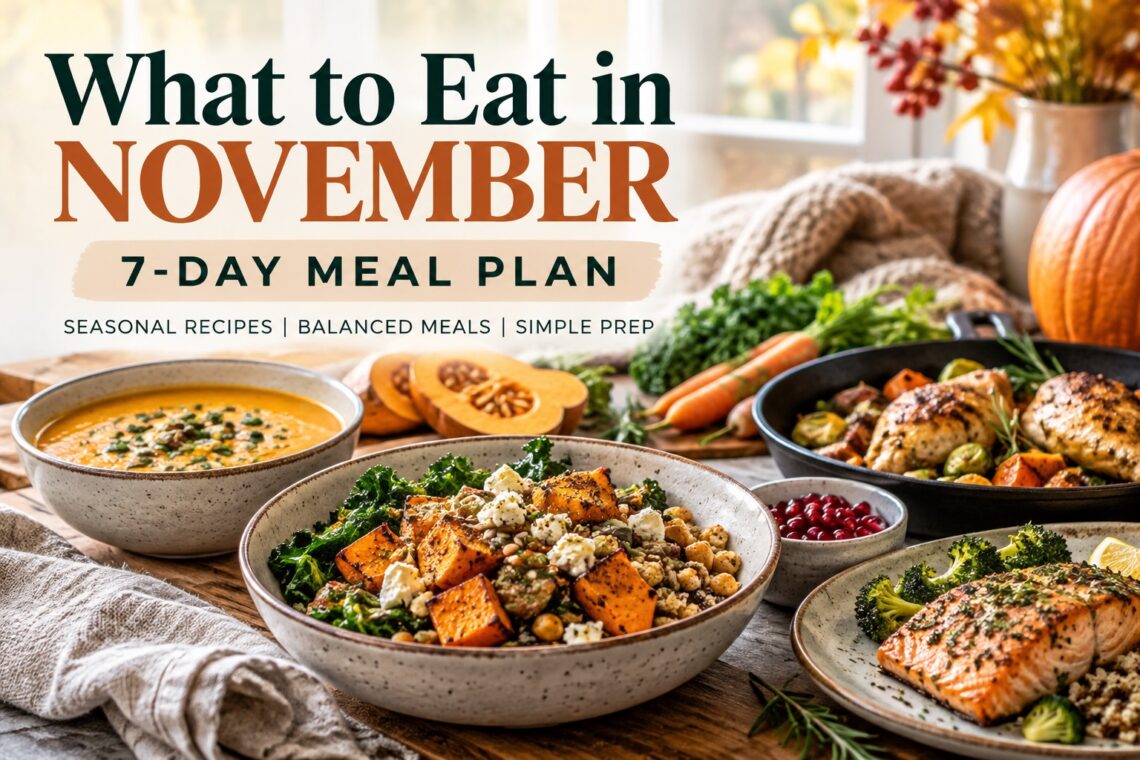
What to Eat in November: Healthy 7-Day Meal Plan
November brings chilly mornings, shorter days, and a growing craving for warm, comforting meals. But when you’re juggling work, family responsibilities, and everything else on your to-do list, figuring out what to eat in November can feel like another exhausting task.
Perhaps you’ve come home after a busy day, opened the refrigerator, and realized you have a few ingredients but absolutely no idea what to cook. After a long day, the last thing you want is to spend two hours in the kitchen.
The good news? You don’t need complicated recipes, expensive ingredients, or restrictive diets to enjoy balanced meals.
If you’re planning your meals throughout autumn, you may also enjoy our guide to what to eat in October, featuring seasonal ingredients and easy meal ideas for busy days.
The key is choosing seasonal ingredients and organizing your meals to save time, money, and energy.
In this guide, you’ll discover a healthy 7-day meal plan designed with busy women over 35 in mind. You’ll find breakfast, lunch, and dinner ideas, five quick recipes, a practical grocery list, and simple strategies for preparing meals ahead of time.
The short answer to what to eat in November: Combine seasonal vegetables such as pumpkin, cabbage, beetroot, and root vegetables with protein-rich foods, whole grains, and healthy fats. Soups, stews, roasted dishes, and warm salads are especially practical during the colder months.
Table of Contents
ToggleWhat Should I Eat in November to Stay Energized and Save Time?
As temperatures drop, it’s natural to crave warm, filling meals. However, satisfying food doesn’t have to be heavy, greasy, or difficult to prepare.
If you’re over 35 and constantly balancing work, family, and personal commitments, planning your meals can make everyday life considerably easier.
You don’t have to cook everything from scratch every day. With a few versatile ingredients and a little preparation, you can enjoy varied meals without turning your kitchen into a second workplace.
What to Eat in November: Seasonal Foods which Are Worth Choosing
November is a great time to rediscover late-autumn vegetables and fruits.
Pumpkin, carrots, beetroot, cabbage, celery root, apples, and pears can become the foundation of simple, nutritious meals. Many provide fiber, vitamins, and minerals, and locally available produce may also be affordable. They’re incredibly versatile, too.
Pumpkin can become a creamy soup, roasted vegetables can be used in several different meals, and apples can add natural sweetness to oatmeal or yogurt.
What Does a Balanced Meal Look Like After 35?
Turning 35 doesn’t automatically mean you need a special diet. However, paying attention to food quality, protein intake, and fiber can support a balanced eating pattern.
One practical way to organize lunch or dinner is to divide your plate into three parts:
- Half your plate: Vegetables, either raw or cooked.
- One-quarter: Protein sources such as fish, chicken, eggs, tofu, beans, or lentils.
- One-quarter: Potatoes, brown rice, whole-wheat pasta, or other carbohydrate sources.
Add a moderate amount of healthy fats, such as olive oil, nuts, or seeds. Think of this as a flexible guide rather than a strict rule. Portion sizes should reflect your appetite, activity level, and individual nutritional needs.
The Simple Rule That Helps You Cook Less
Instead of preparing seven completely different lunches, focus on cooking a few ingredients that work in multiple recipes.
For example, on Sunday you could roast a tray of vegetables, cook some chicken, and prepare a pot of soup.
On Monday, serve the vegetables as a side dish. On Tuesday, add them to a warm salad. On Wednesday, combine some with chickpeas and seasonings.
Keep only the portions you can safely eat within the next few days in the refrigerator, and freeze the rest.
The main idea? You don’t need 21 completely different recipes for one week. You need a handful of versatile ingredients that can become delicious, balanced meals.
Which Seasonal Foods Should You Buy in November?
If you want to eat well without spending too much, the solution starts with your grocery list.
November offers plenty of ingredients that work beautifully in warm, satisfying dishes. Depending on where you live, you may find late-autumn vegetables, stored apples and pears, and affordable pantry staples that can be combined in countless ways.
You don’t have to buy everything. Choose ingredients you can use in several meals throughout the week. Read about the ingredients you can choose in September.
Seasonal Vegetables for Soups, Side Dishes, and Salads
Vegetables are the starting point for a healthy November meal plan. Here are some practical choices:
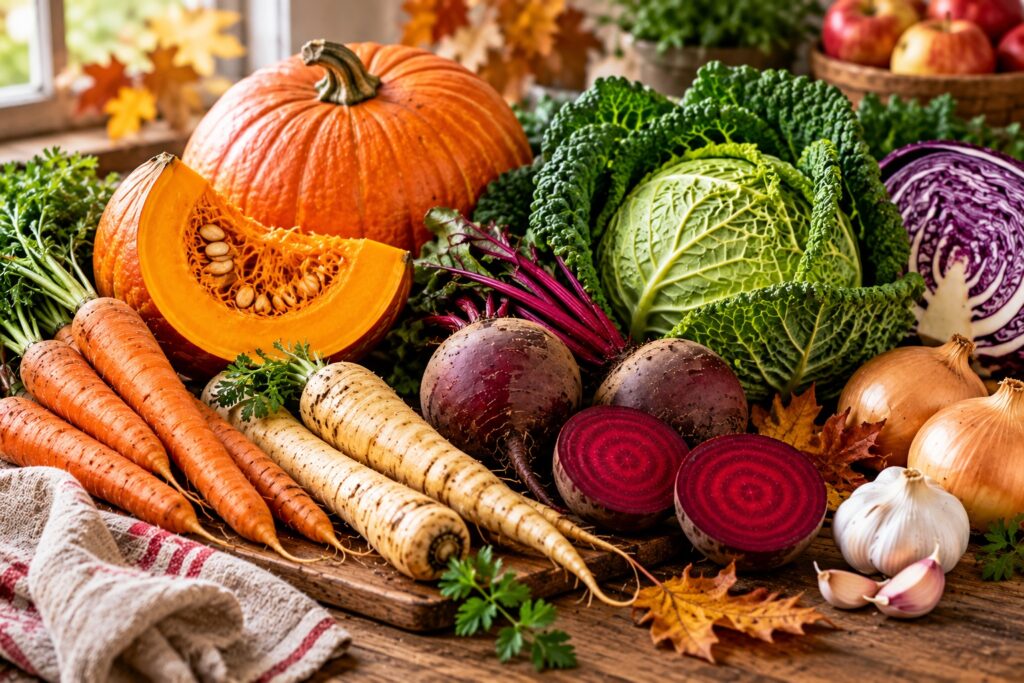
- Pumpkin and winter squash: Excellent for creamy soups, purées, roasted side dishes, and even desserts. They contain carotenoids, including beta-carotene, which the body can convert into vitamin A.
- Green or red cabbage: Perfect for crunchy salads, soups, and cooked dishes. Cabbage provides fiber and vitamin C.
- Beetroot: Delicious roasted, boiled, or added to salads with cheese, walnuts, and legumes.
- Carrots, celery root, and parsnips: Ideal for soups, stews, and trays of roasted vegetables.
- Leeks: A flavorful addition to omelets, soups, and potato dishes.
- Potatoes: An affordable carbohydrate source for soups, side dishes, and oven-baked meals.
A useful time-saving tip: Roast a tray of pumpkin, carrots, beetroot, and parsnips. Enjoy some at dinner and use the rest in warm salads or grain bowls, following safe food-storage practices.
Fruits for Healthy Snacks and Breakfasts
Although the selection of freshly harvested local fruit becomes smaller in November, apples and pears stored from the autumn harvest remain excellent choices.
Apples are easy to take to work, add to oatmeal, or bake with cinnamon. They provide fiber, especially when eaten with the skin.
Pears pair beautifully with plain yogurt, walnuts, or cottage cheese. They can turn a basic breakfast into something delicious with very little preparation.
You can also include kiwi, citrus fruits, or frozen berries, depending on your preferences and budget. Not all of these are locally seasonal, but they can add variety to your diet.
For a more satisfying snack, pair fruit with yogurt, nuts, or another protein source.
Protein Sources and Pantry Staples for a Balanced Week
When planning your November meals, don’t focus exclusively on fruits and vegetables. Protein-rich foods and fiber-containing ingredients help you build balanced, satisfying meals. Consider keeping these foods on your shopping list:
- Eggs: For omelets, boiled eggs, and quick dinners.
- Plain or Greek yogurt: For breakfasts, snacks, and homemade sauces.
- Fish: Fresh, frozen, or canned, depending on your budget.
- Chicken or turkey: For oven-baked dishes, soups, and salads.
- Lentils, chickpeas, and beans: Plant-based sources of protein and fiber.
- Oats, brown rice, and whole-wheat pasta: Versatile ingredients that pair well with vegetables and proteins.
- Nuts and seeds: Useful additions to breakfasts and salads.
You don’t need to buy all these foods every week. A few protein sources, several vegetables, and two types of grains can already form the basis of a varied menu.
Healthy 7-Day Meal Plan: What to Eat in November from Monday to Sunday
When you have a busy schedule, planning your meals may seem like one more responsibility. But imagine knowing what you’re going to cook before the week begins, instead of wondering what to make every evening.
This seven-day meal plan focuses on seasonal ingredients, accessible recipes, and meals that don’t require complicated cooking techniques.
It includes three main meals each day and optional snack suggestions. This is not a weight-loss diet or a meal plan with fixed portions. Adjust the quantities according to your appetite, activity level, preferences, and individual needs.
Note: This meal plan is for general information and inspiration. It doesn’t replace personalized advice from a registered dietitian or healthcare professional, especially if you have allergies, medical conditions, or specific nutritional requirements.
Your Weekly Meal Plan at a Glance
Day | Breakfast | Lunch | Dinner |
Monday | Yogurt with oats and apple | Chicken with roasted vegetables | Creamy pumpkin soup |
Tuesday | Spinach omelet | Chickpea and beetroot salad | Fish with potatoes and cabbage |
Wednesday | Pear and walnut oatmeal | Red lentil soup | Whole-wheat chicken wrap |
Thursday | Cottage cheese with whole-grain bread | Brown rice with vegetables and egg | Mushroom stew with polenta |
Friday | Yogurt with fruit and nuts | Whole-wheat tuna pasta | Warm pumpkin and chickpea salad |
Saturday | Eggs with vegetables | Roast turkey with root vegetables | Vegetable soup |
Sunday | Oat and banana pancakes | Fish with roasted vegetables | Lentil and beetroot salad |
Monday – Start the Week with Simple Meals
Mondays are often busy enough without complicated recipes.
Breakfast: Greek Yogurt with Oats, Apple, and Cinnamon
Combine plain or Greek yogurt with rolled oats and a diced apple. Add cinnamon and a few chopped walnuts.
This breakfast provides a combination of protein, fiber, and unsaturated fats without requiring any cooking.
Preparation time: Approximately 5 minutes.
Lunch: Oven-Baked Chicken with Autumn Vegetables
Place chicken pieces, carrots, pumpkin, and potatoes on a baking tray.
Season with thyme, sweet paprika, black pepper, and a little olive oil.
Roast until the vegetables are tender and the chicken is thoroughly cooked. For food safety, the internal temperature of chicken should reach 165°F (74°C).
Estimated time: 10 minutes of preparation plus 30–40 minutes in the oven, depending on the size of the pieces.
Dinner: Creamy Pumpkin Soup with Seeds
Simmer pumpkin, carrots, onion, and a small potato until tender. Blend until smooth and top with pumpkin seeds.
Serve with whole-grain bread and a protein source, such as cottage cheese or chickpeas.
Optional snack: A pear and a few almonds.
Time-saving tip: Prepare an extra portion of chicken for Wednesday’s wrap. Refrigerate it promptly and store it safely.
Tuesday – Meals That Almost Cook Themselves
Tuesday is all about ingredients that require little supervision.
Breakfast: Spinach Omelet with Whole-Grain Bread
Beat two eggs and add a handful of spinach.
Cook in a nonstick skillet and serve with whole-grain bread and fresh vegetables.
Preparation time: Approximately 10 minutes.
Lunch: Chickpea, Beetroot, and Feta Salad
Combine cooked or canned chickpeas, roasted beetroot, leafy greens, and a little feta cheese.
Dress with olive oil and lemon juice.
Using precooked beetroot makes this lunch especially convenient.
Dinner: Oven-Baked Fish with Potatoes and Cabbage Salad
Choose trout, cod, or another fish you enjoy.
Season with lemon, garlic, and herbs, then bake until thoroughly cooked.
Serve with roasted potatoes and shredded red cabbage.
Optional snack: Plain yogurt with pumpkin seeds.
Time-saving tip: Roast the potatoes first and add the fish later, since the potatoes usually take longer to cook.
Wednesday – Satisfying Meals for a Busy Day
By the middle of the week, you may be running low on energy.
Wednesday’s meals are simple to prepare and offer a satisfying combination of nutrients.
Breakfast: Warm Oatmeal with Pears and Walnuts
Cook rolled oats in milk or your preferred plant-based drink.
Add pear slices, cinnamon, and chopped walnuts.
For extra protein, serve with plain yogurt.
Preparation time: Approximately 10 minutes.
Lunch: Red Lentil and Vegetable Soup
Simmer red lentils with carrots, onion, celery root, and your favorite seasonings.
Split red lentils cook relatively quickly and generally don’t require soaking.
Serve with whole-grain bread and a spoonful of yogurt, if desired.
Dinner: Whole-Wheat Chicken Wrap with Vegetables
Use chicken prepared earlier and stored safely.
Fill a whole-wheat wrap with chicken, shredded cabbage, grated carrot, and a yogurt-garlic sauce.
If you don’t have chicken, replace it with chickpeas or tofu.
Optional snack: An apple with peanut butter.
Time-saving tip: Make an extra serving of lentil soup and freeze it for another busy day.
Thursday – Make the Most of Your Ingredients
Thursday proves that you don’t need to reinvent your meals every day.
A few familiar ingredients can become something completely different.
Breakfast: Cottage Cheese with Whole-Grain Bread and Vegetables
Serve cottage cheese with whole-grain bread, cucumber, bell pepper, or other fresh vegetables.
Add seeds or a few walnuts if you like.
Preparation time: Approximately 5 minutes.
Lunch: Brown Rice with Vegetables and Egg
Cook brown rice fresh, or use a portion that was frozen promptly after cooking and reheated safely.
Add sautéed vegetables and a thoroughly cooked egg.
Carrots, leeks, mushrooms, and cabbage all work well.
Dinner: Mushroom Stew with Polenta
Cook onion and garlic gently, add mushrooms and a little tomato paste, then simmer until you have a flavorful sauce.
Serve with polenta and, if desired, a spoonful of yogurt or some cheese.
Optional snack: A pear and a few walnuts.
Time-saving tip: Chop the vegetables for dinner earlier in the day and keep them covered in the refrigerator.
Friday – A Quick Dinner After a Long Week
Friday is not the ideal evening for elaborate cooking.
After a busy week, you deserve something delicious that doesn’t take up your entire evening.
Breakfast: Yogurt with Fruit, Nuts, and Seeds
Combine plain yogurt with diced apple or pear, oats, and a few walnuts.
Preparation time: Approximately 5 minutes.
Lunch: Whole-Wheat Pasta with Tuna and Vegetables
Cook whole-wheat pasta and toss it with drained canned tuna, canned tomatoes, garlic, and vegetables.
Add spinach if you have some available.
Dinner: Warm Roasted Pumpkin and Chickpea Salad
Roast pumpkin cubes with paprika and a little olive oil.
Combine with chickpeas, leafy greens, and a yogurt-lemon dressing.
Sprinkle with pumpkin seeds.
Optional snack: A piece of fruit or yogurt with cinnamon.
Time-saving tip: If you have roasted pumpkin stored in the freezer, dinner can take approximately 15 minutes once the ingredients are safely reheated.
Saturday – Seasonal Comfort Food for the Whole Family
Saturday is a good opportunity to prepare something a little more substantial without spending half the day in the kitchen.
Breakfast: Eggs with Vegetables and Whole-Grain Bread
Prepare boiled eggs, an omelet, or fully cooked eggs in a skillet.
Serve with fresh vegetables and whole-grain bread.
Lunch: Roast Turkey with Root Vegetables
Arrange turkey pieces on a baking tray with carrots, parsnips, celery root, and potatoes.
Season with rosemary, thyme, and garlic.
Roast until the turkey reaches an internal temperature of 165°F (74°C).
You can prepare additional portions for the family.
Dinner: Vegetable Soup with Whole-Grain Bread and Cheese
Use the vegetables remaining in your refrigerator.
Carrots, celery root, leeks, potatoes, and cabbage make a flavorful soup.
Serve with whole-grain bread and cottage cheese, or add beans for extra protein.
Optional snack: Baked apple with cinnamon and yogurt.
Time-saving tip: Freeze an extra serving of turkey for the following week.
Sunday – Comforting Meals and Preparation for the Week Ahead
Sunday is a chance to slow down and prepare for a less stressful week.
Breakfast: Oat and Banana Pancakes with Yogurt
Combine ground oats, an egg, and a ripe banana.
Cook small pancakes in a nonstick skillet.
Serve with plain yogurt and fruit.
Lunch: Fish with Roasted Vegetables
Prepare trout or another fish you enjoy with carrots, potatoes, and beetroot.
Add lemon, garlic, and herbs for flavor.
Dinner: Lentil, Beetroot, and Cheese Salad
Combine cooked lentils with grated carrot, beetroot, leafy greens, and a little cheese.
Finish with a simple olive oil and lemon dressing.
Optional snack: A pear and a few almonds.
Time-saving tip: Set aside 20–30 minutes to check what ingredients you have left and plan the following week’s meals.
You don’t need to cook everything in advance. Sometimes simply knowing what you’re going to make is enough to save time.
How to Adapt This Meal Plan to Your Schedule and Preferences
This seven-day plan isn’t a strict set of rules. It’s a starting point.
If you don’t have time to prepare lunch in the morning, use a safely stored portion from a previous meal.
If you don’t eat meat, replace chicken or turkey with tofu, lentils, chickpeas, or beans.
If you’re cooking for your family, keep the main dishes and adjust portions or side dishes to suit everyone’s preferences.
Remember: Snacks are optional, and portion sizes should reflect your individual needs. You don’t have to eat at fixed times or follow the plan perfectly to maintain a balanced diet.
What to Eat in November: 5 Quick November Recipes Ready in About 30 Minutes
When you get home after a long day, spending an hour in front of the stove probably isn’t your idea of relaxation.
These five recipes use accessible ingredients, many of which already appear in the weekly meal plan. That means fewer special purchases and less food waste.
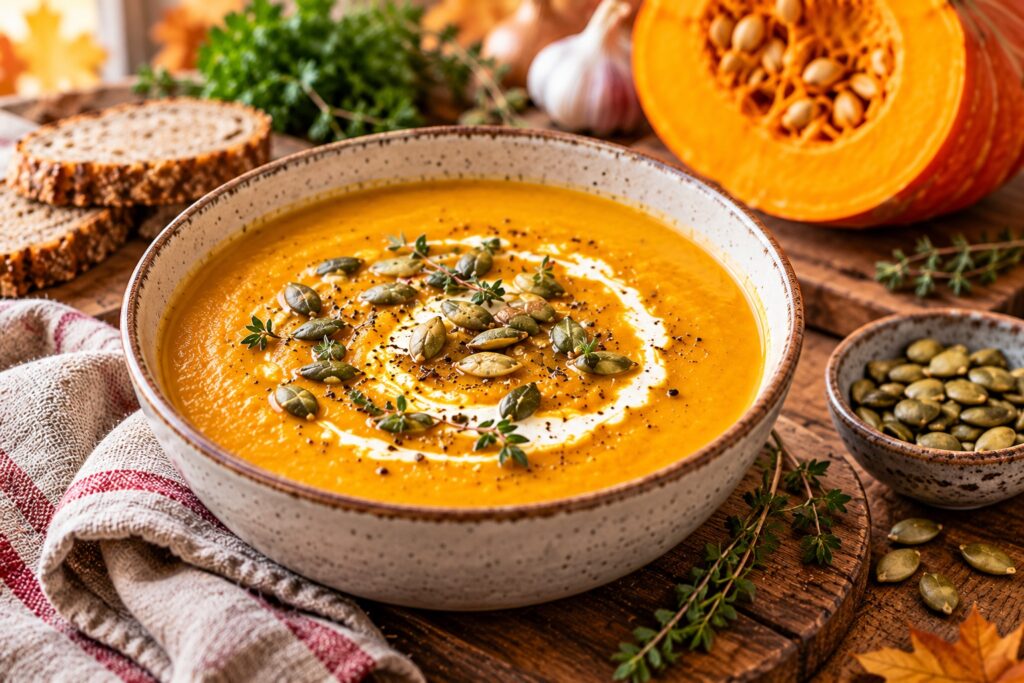
1. Creamy Pumpkin Soup with Seeds – Ready in 30 Minutes
A smooth, flavorful pumpkin soup is just what you need on a chilly November evening.
Total time: Approximately 30 minutes
Servings: 2
Ingredients:
- 400 g (14 oz) peeled pumpkin, diced
- 1 medium carrot, approximately 100 g (3.5 oz)
- 1 small onion, approximately 70 g (2.5 oz)
- 1 small potato, approximately 100 g (3.5 oz)
- 500–600 ml (2–2½ cups) water or vegetable stock
- 1 teaspoon olive oil
- 20 g (about 2 tablespoons) pumpkin seeds
- Salt, pepper, and a little ginger, to taste
Instructions:
- Peel and dice the onion, carrot, and potato.
- Heat the olive oil in a saucepan and cook the onion for about two minutes.
- Add the pumpkin, carrot, potato, and water or vegetable stock.
- Simmer for 18–22 minutes, until the vegetables are tender.
- Blend until smooth, then season with salt, pepper, and ginger.
- Serve with pumpkin seeds sprinkled on top.
Practical tip: For a more substantial meal, serve the soup with whole-grain bread and cottage cheese or crispy chickpeas.
2. Warm Beetroot and Chickpea Salad – Ready in 15 Minutes
Who says salads are only for summer?
A warm salad with beetroot, chickpeas, and cheese makes an excellent quick lunch.
Total time: 15 minutes, using precooked beetroot
Servings: 2
Ingredients:
- 250 g (9 oz) cooked beetroot
- 240 g (8.5 oz) cooked chickpeas, drained and rinsed
- 60 g (2 oz) feta cheese
- 40 g (1.5 oz) spinach or salad leaves
- 20 g (about 2 tablespoons) walnuts
- 1 tablespoon olive oil
- 1 tablespoon lemon juice
- Black pepper, to taste
Instructions:
- Cut the beetroot into cubes or thin slices.
- Warm the chickpeas in a nonstick skillet for 3–4 minutes.
- Add the beetroot and cook gently for another two minutes.
- Place the spinach or salad leaves in a bowl.
- Add the warm ingredients, crumbled feta, and chopped walnuts.
- Mix the olive oil with lemon juice and drizzle over the salad.
Practical tip: Replace feta with a lower-sodium cheese or tofu if preferred.
If you’re taking this salad to work, keep the greens and dressing separate until serving.
3. Mushroom and Spinach Omelet – Ready in 15 Minutes
Sometimes the best dinner is the one you can make with a few everyday ingredients.
This mushroom and spinach omelet works equally well for breakfast or a quick evening meal.
Total time: 15 minutes
Servings: 2
Ingredients:
- 4 eggs
- 150 g (5 oz) button mushrooms
- 80 g (3 oz) fresh spinach
- 30 ml (2 tablespoons) milk, optional
- 1 teaspoon olive oil
- 1 garlic clove
- Salt and pepper, to taste
- 2 slices whole-grain bread, to serve
Instructions:
- Clean and slice the mushrooms.
- Heat the olive oil in a skillet and cook the mushrooms for about five minutes, until their released moisture evaporates.
- Add the minced garlic and spinach, then cook for another minute.
- Beat the eggs with the milk, salt, and pepper.
- Pour the mixture over the vegetables.
- Cook over low heat until the eggs are fully set.
Serve with whole-grain bread and fresh vegetables if desired.
Practical tip: Frozen spinach works too. Thaw it and squeeze out the excess water before adding it to the skillet.
4. Whole-Wheat Pasta with Tuna and Vegetables – Ready in 20 Minutes
If you have whole-wheat pasta and canned tuna in your pantry, you’re already halfway to a quick meal.
Total time: Approximately 20 minutes
Servings: 2
Ingredients:
- 160 g (5.6 oz) dry whole-wheat pasta (for two persons )
- 120–140 g (4–5 oz) drained canned tuna
- 200 g (7 oz) canned diced tomatoes
- 100 g (3.5 oz) fresh or frozen spinach
- 2 garlic cloves
- 1 tablespoon olive oil
- 1 teaspoon dried oregano
- Salt and pepper, to taste
Instructions:
- Cook the pasta according to the package instructions.
- Meanwhile, heat the olive oil in a skillet and briefly cook the chopped garlic.
- Add the tomatoes and oregano.
- Simmer the sauce for 5–7 minutes.
- Add the spinach and drained tuna, then heat everything through.
- Toss the pasta with the sauce. Add a little pasta cooking water if needed.
Practical tip: For variety, replace tuna with sardines, white beans, or chickpeas.
If you eat tuna regularly, alternate it with other protein sources and choose lower-mercury varieties, such as canned light tuna.
5. Whole-Wheat Chicken Wrap with Yogurt Sauce – Ready in 15 Minutes
Have some cooked chicken left from lunch?
You don’t need to start another recipe from scratch.
A whole-wheat wrap with crunchy vegetables and yogurt sauce turns leftovers into a completely different meal.
Total time: Approximately 15 minutes, using previously cooked chicken
Servings: 2
Ingredients:
- 2 medium whole-wheat wraps
- 200 g (7 oz) cooked chicken breast, safely stored
- 100 g (3.5 oz) green or red cabbage
- 1 medium carrot
- 100 g (3.5 oz) Greek yogurt
- 1 small garlic clove
- 1 teaspoon lemon juice
- Black pepper and fresh herbs, to taste
Instructions:
- Cut the cooked chicken into strips and reheat thoroughly.
- Finely shred the cabbage and grate the carrot.
- Mix the yogurt with crushed garlic, lemon juice, and herbs.
- Warm the wraps briefly in a dry skillet.
- Divide the chicken, vegetables, and sauce between the wraps.
- Roll tightly and serve immediately.
Practical tip: If you don’t have cooked chicken, use chickpeas or browned tofu instead.
Which Recipe Should You Choose When You're Short on Time?
Not every evening looks the same. Some days you have half an hour to cook; other days, you barely have 15 minutes.
Recipe | Total Time | Main Advantage |
Creamy pumpkin soup | 30 minutes | Easy to portion and freeze |
Warm beetroot and chickpea salad | 15 minutes | Uses precooked beetroot |
Mushroom and spinach omelet | 15 minutes | Requires few ingredients |
Whole-wheat tuna pasta | 20 minutes | Uses pantry staples |
Whole-wheat chicken wrap | 15 minutes | Makes use of cooked chicken |
Preparation times are estimates and assume the ingredients are available in the form specified.
Not every dinner has to be impressive. A simple meal made with ingredients you enjoy can be exactly what you need after a demanding day. Discover more meal ideas.
Grocery List for Your November Meal Plan
A healthy meal plan starts with a practical shopping list.
When you know what you’re going to cook, you can avoid repeated trips to the supermarket, unnecessary purchases, and food forgotten at the back of the refrigerator.
The list below is designed for approximately one person over seven days, based on the 21 main meals in the plan. Snacks are optional.
The five detailed recipes are preparation options for meals already included in the menu, not five additional meals.
Quantities are estimates and should be adjusted to your appetite and household needs.
Vegetables and Fruits
Ingredient | Approximate Quantity |
Peeled pumpkin or winter squash | 600–800 g |
Carrots | 600–800 g |
Potatoes | 600–800 g |
Beetroot | 350–450 g |
Green or red cabbage | 300–400 g |
Mushrooms | 200–250 g |
Fresh or frozen spinach | 150–200 g |
Onions | 3–4 |
Garlic | 1 bulb |
Celery root and parsnips | 250–350 g total |
Leek | 1 small |
Lettuce or mixed greens | 100–150 g |
Tomatoes, cucumbers, or bell peppers | 250–350 g |
Apples | 3–4 |
Pears | 3 |
Banana | 1 |
Lemons | 1–2 |
These quantities refer approximately to the edible portions of the ingredients. You may need to purchase slightly more when vegetables have thick peels or other parts that will be discarded.
Protein Sources and Dairy Products
Ingredient | Approximate Quantity |
Eggs | 5–6 |
Raw chicken breast | 300–350 g |
Raw turkey | 150–200 g |
Fish | 300–400 g |
Canned tuna | 1 small can |
Plain or Greek yogurt | 700–900 g |
Cottage cheese | 150–200 g |
Feta or similar cheese | 80–100 g |
Milk | 200–300 ml |
Cooked, drained chickpeas | 250–350 g |
Dry lentils | 120–160 g |
Cooked beans, optional | 100–150 g |
To reduce waste, use the same yogurt for breakfast and homemade sauces.
A can of chickpeas can be divided between Tuesday’s salad and Friday’s dinner, with portion sizes adjusted as needed.
Grains, Canned Foods, and Pantry Staples
Ingredient | Approximate Quantity |
Rolled oats | 150–200 g |
Whole-grain bread | 250–350 g |
Whole-wheat wraps | 1–2 |
Dry whole-wheat pasta | 70–90 g |
Dry brown rice | 60–80 g |
Cornmeal for polenta | 50–70 g |
Canned tomatoes or tomato paste | 200–300 g |
Walnuts and almonds | 100–150 g |
Pumpkin seeds | 30–50 g |
Peanut butter | 1–2 tablespoons |
Olive oil | 60–100 ml |
Cinnamon, thyme, oregano, paprika, pepper | To taste |
You don’t need to buy more oil, spices, or grains if you already have them.
Some products come in packages larger than the amount needed for one week. Store the remaining ingredients for future meals.
How to Reduce Food Waste and Grocery Costs
An efficient grocery list isn’t just about choosing nutritious foods. It’s also about using what you buy.
- Check your refrigerator before shopping. You may already have carrots, eggs, yogurt, or canned chickpeas.
- Choose ingredients that work in several recipes. Pumpkin can become soup, a side dish, or a warm salad.
- Freeze extra portions. Bread, cooked meals, and many vegetables can be stored longer when frozen correctly.
- Use perishable ingredients first. Leafy greens, mushrooms, and fresh fish require more attention than root vegetables.
- Keep one meal flexible. If you have leftover ingredients, adapt a planned dish instead of buying more food.
If you live alone, you don’t necessarily need to buy an entire large cabbage or pumpkin. Look for smaller portions, share ingredients with family members, or plan how you’ll preserve the extra food.
How to Prepare Meals for 7 Days Without Cooking Every Day
Meal preparation can be one of the most useful habits for anyone with a busy schedule.
It doesn’t mean cooking all 21 meals on Sunday and filling the refrigerator with identical containers. Instead, prepare a few basic ingredients so that half the work is already done when you need to cook.
For busy women over 35, this approach—often called meal prep—can reduce cooking time and the number of daily decisions about food.
What You Can Prepare on Sunday in 60–90 Minutes
You don’t need to spend an entire afternoon preparing meals.
With a little planning, you can get several useful components ready for the first part of the week.
Minutes 0–15: Prepare the Ingredients
Wash the vegetables, peel the carrots, pumpkin, and potatoes, and cut everything into manageable pieces.
Preheat the oven and prepare a tray of seasonal vegetables.
At the same time, put the ingredients for pumpkin soup into a saucepan.
Minutes 15–45: Let the Oven and Stove Do the Work
Roast the vegetables and, if you have enough space, cook chicken separately for Monday and Wednesday.
Follow the appropriate cooking time for each ingredient and check that the chicken reaches an internal temperature of 165°F (74°C).
Meanwhile, blend the soup and organize dry breakfast ingredients such as oats, nuts, and seeds.
Minutes 45–75: Portion and Organize
Once the food is cooked, divide it into shallow containers to help it cool quickly.
Refrigerate the portions intended for the next few days and freeze anything you won’t eat within the recommended storage period.
Don’t leave cooked food at room temperature for more than two hours.
Minutes 75–90: Plan the Rest of the Week
Check your menu and decide which ingredients need to be thawed or cooked fresh later in the week.
Label containers with their contents and preparation dates.
The 60–90-minute estimate is flexible. Larger quantities or limited kitchen equipment may increase the total time.
How to Store Prepared Food Safely
An organized meal plan also needs to be safe.
Food prepared on Sunday shouldn’t automatically remain in the refrigerator until Saturday.
For most cooked leftovers, a practical guideline is to consume them within 3–4 days, provided they were cooled promptly and stored at 40°F (4°C) or below.
If you won’t eat them within that period, freeze them as soon as practical.
Keep these guidelines in mind:
- Raw meat and fish: Store separately from ready-to-eat foods in sealed containers to prevent cross-contamination.
- Cooked rice: Cool promptly, ideally within one hour, and refrigerate. As a cautious approach, eat refrigerated rice within 24 hours or freeze it in portions.
- Soups and stews: Divide into smaller, shallow containers so they cool faster.
- Frozen cooked meals: Thaw safely in the refrigerator and reheat leftovers thoroughly to approximately 165°F (74°C).
- Leafy salads: Keep the dressing separate and assemble close to serving time.
Don’t rely on smell or appearance alone to decide whether food is safe to eat.
How to Turn Leftovers into New Meals
One of the biggest advantages of meal prep is that you don’t have to eat the same dish three times in a row.
For example, cooked chicken can become a wrap with cabbage and yogurt sauce. Roasted vegetables can be turned into a warm chickpea salad. A basic vegetable soup can be made more substantial by adding lentils or beans.
Here are a few practical combinations:
- Leftover roasted pumpkin: Add it to a salad with chickpeas, cheese, and seeds.
- Cooked chicken: Use it in a whole-wheat wrap or a rice bowl with vegetables.
- Roasted vegetables: Blend them into a creamy soup with vegetable stock.
- Cooked lentils: Combine them with beetroot, herbs, and lemon dressing.
- Extra whole-grain bread: Slice and freeze it for future breakfasts.
Only reuse food that has been stored correctly and is still within a safe consumption period.
Reheating cannot automatically make improperly stored food safe.
Sometimes the best meal plan is the one that gives you flexibility: prepare a few ingredients, combine them in different ways, and save time for what matters most.
Common Mistakes to Avoid When Planning Your November Meals
You’ve bought nutritious ingredients, saved a few recipes, and promised yourself you’ll cook more consistently. Yet after a few days, the plan starts falling apart. Sound familiar?
Often, the problem isn’t a lack of motivation. It’s that we’ve made meal planning unnecessarily complicated. Here are three mistakes worth avoiding.
Choosing Recipes That Are Too Complicated
A recipe that looks spectacular in a photograph may require 15 ingredients, several pans, and an hour of preparation.
That’s not always practical after a normal workday.
What should you do instead?
Choose simple meals most days: soups, omelets, roasted vegetables, hearty salads, or whole-wheat pasta.
Save elaborate recipes for days when you have the time and genuinely enjoy cooking.
Buying Ingredients You Never Use
Another common mistake is going grocery shopping without checking what you already have at home.
You end up buying another bag of spinach even though last week’s bag is still in the refrigerator.
Or you purchase a special ingredient for one recipe and never use it again.
The solution: Check your refrigerator, freezer, and pantry before making your shopping list.
Choose ingredients you can use in at least two different meals. Pumpkin, for example, can become soup, a roasted side dish, or a warm salad. Chickpeas work in soups, wraps, and grain bowls.
Skipping Meals and Eating Whatever Is Available
When your day is packed, it’s easy to postpone lunch until you’re extremely hungry. At that point, the fastest option may feel like the only option.
You don’t have to eat at fixed times or follow a rigid schedule. However, keeping convenient foods available can help during busy days. Store nuts, fruit, or whole-grain crackers at work. If you have access to a refrigerator, bring yogurt or a prepared lunch.
Remember: A healthy meal plan doesn’t have to be followed perfectly. If you swap lunch and dinner or choose a simpler meal one day, it doesn’t mean you’ve failed.
A flexible plan built around foods you genuinely enjoy is much easier to maintain than a complicated routine you abandon after three days.
Frequently Asked Questions About What to Eat in November
If you’re still wondering what to eat in November to enjoy varied, balanced, and easy-to-prepare meals, these answers will help you make simpler choices.
Which Vegetables Are in Season in November?
Depending on your region, November is a good time to enjoy pumpkin, winter squash, cabbage, beetroot, carrots, celery root, parsnips, leeks, and potatoes.
Many are harvested in autumn and can be stored for colder months. They’re excellent for creamy soups, stews, roasted side dishes, and warm salads.
Choose vegetables according to local availability, freshness, and budget.
What Can I Cook Quickly After Work?
If you only have 15–20 minutes, try a mushroom and spinach omelet, whole-wheat tuna pasta, a chicken and vegetable wrap, or a warm chickpea salad.
A useful trick is to keep portions of cooked ingredients in the freezer. That way, you can make a delicious dinner without starting completely from scratch.
How Can I Eat Healthy on a Budget?
Plan meals around affordable ingredients such as eggs, lentils, beans, chickpeas, oats, potatoes, and seasonal vegetables.
Buy quantities that match your needs and use the same ingredients in several recipes. For example, cabbage can be used in a fresh salad, a soup, and a cooked side dish.
What Should I Eat for Breakfast on Cold Mornings?
Warm oatmeal with apples and cinnamon is a comforting choice. Other options include vegetable omelets, whole-grain toast with cottage cheese, or oat and banana pancakes.
For a more satisfying breakfast, combine protein sources with fiber-rich foods.
Can I Prepare This Meal Plan for My Entire Family?
Absolutely.
The suggested dishes can be adapted for more people by adjusting quantities and side dishes.
For example, prepare a large tray of roasted chicken and vegetables, then let each family member build a plate according to their preferences and nutritional needs.
How Can I Adapt the Meal Plan If I Don't Eat Meat?
Replace chicken and turkey with tofu, lentils, chickpeas, beans, or other plant-based protein sources. Try mushroom and bean stew, hearty lentil soup, or warm chickpea salads.
If you follow a fully plant-based diet, pay particular attention to vitamin B12 and other essential nutrients.
Whatever your preferences, your November meal plan can be simple, satisfying, and adapted to your lifestyle.
What to Eat in November: Less Stress, Better Planning, and Meals That Make You Feel Good
Eating well in November doesn’t mean following complicated diets, buying expensive ingredients, or spending hours in the kitchen.
Sometimes the best choices are also the simplest: a warm soup, seasonal vegetables, a lunch prepared ahead of time, or a quick dinner shared with the people you love.
If you’ve often wondered what to eat in November, I hope this seven-day meal plan has given you the inspiration you need.
With a little organization, a thoughtful grocery list, and a few practical recipes, you can turn everyday meals from another source of stress into something to look forward to.
Don’t aim for perfection. Choose balance, variety, and meals that fit your lifestyle.
Now I’d love to hear from you: What’s your favorite November dish, and what do you find most challenging about planning meals for the entire week?
Share your thoughts in the comments!
Nutrition and Health Disclaimer
The information provided in this article is for general educational and informational purposes only and is not intended as medical advice, nutritional counseling, or a substitute for professional healthcare guidance.
The suggested 7-day meal plan and recipes are examples and may not meet everyone’s individual nutritional needs. Portion sizes and food choices should be adjusted according to age, activity level, health conditions, allergies, and dietary preferences.
If you have a medical condition, specific dietary requirements, or concerns about your nutrition, consult a qualified healthcare professional or registered dietitian before making significant changes to your diet.
Food preparation and storage recommendations are general guidelines. Always follow current food safety recommendations and use appropriate cooking and storage practices.

You May Also Like
10 Spring Greens and Their Health Benefits
March 14, 2026
Snack 3 Healthy Ways!
March 4, 2023