What to Eat in May: Seasonal Foods and Easy Meal Ideas for Busy Women
Wondering what to eat in May when the days get warmer but your schedule doesn’t get any quieter?
May is one of my favorite months for simplifying everyday meals. Spring produce gives us plenty of fresh ingredients to work with, and many of them don’t need complicated recipes to taste good.
For busy women 35+, that’s exactly what I want from seasonal eating: not another set of food rules, but an easier way to decide what to buy, what to cook, and how to put a satisfying meal on the table when time is limited.
My approach is simple. I choose a few seasonal foods I actually enjoy, add practical staples I know I’ll use, and build several meals from the same ingredients.
No perfect meal plan. No refrigerator filled with ingredients for recipes I’ll never make.
Just real food that works in real life.
In this guide, I’ll show you what I eat in May, which seasonal foods I look for, how I turn them into quick breakfasts, lunches and dinners, and how I organize my grocery shopping so that eating well doesn’t become another full-time job.
And if you want to make your next grocery trip even easier, I’ve created a free May Seasonal Eating Checklist you can save on your phone or print. You’ll find it below.
Internal link near the introduction: If you want to see how my meals change from one month to another, read What I Eat in April first.
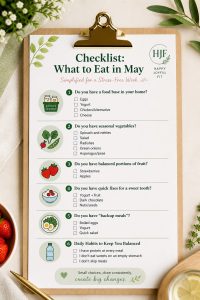
Want a simpler way to plan healthy meals this May?
Download the free printable checklist and keep seasonal, balanced food ideas handy all week long.
Table of Contents
ToggleWhat to Eat in May: Start With What's in Season
When I plan my May meals, I don’t start with recipes.
I start with ingredients.
That small change has made grocery shopping and meal planning much easier for me.
Instead of finding five different recipes and buying a long list of ingredients for each one, I choose several seasonal foods and ask:
How many different meals can I make with this?
If I can use an ingredient for breakfast, lunch or dinner — or transform it into two or three different dishes — it earns its place in my shopping basket.
Seasonal availability varies depending on where you live, the weather and the growing season, so I don’t treat a seasonal produce list as a strict rule.
I use it as inspiration.
Seasonal Vegetables to Look for in May
Depending on your location, May can bring a beautiful mix of late-spring vegetables and greens.
Instead of trying to buy everything that looks good, choose a handful you know you’ll actually use.
The goal isn’t to create the most impressive refrigerator.
The goal is to make your next meal easier.
When choosing vegetables, I like to ask:
Can I eat this in more than one way?
A vegetable that works in a salad today, an omelet tomorrow and a quick dinner later in the week is much more useful to me than an ingredient I bought for one complicated recipe.
Seasonal Fruits to Enjoy in May
Fruit is one of the easiest ways to add variety to breakfast and snacks without creating extra cooking.
Depending on where you live and what’s available locally, choose two or three fruits for the week rather than buying a little of everything.
Fruit can become:
a grab-and-go snack;
a topping for Greek yogurt;
part of overnight oats;
an addition to breakfast;
or a simple dessert.
This is also where I like to keep nutrition uncomplicated.
A healthy diet doesn’t depend on one special “superfood.” Variety matters. Fruits, vegetables, whole grains, legumes, nuts and other nutritious foods can all contribute to an overall balanced eating pattern.
How I Build My May Grocery List
My grocery list used to be a collection of good intentions.
I’d see something healthy, put it in the cart and assume I’d somehow figure out what to do with it later.
Sometimes I did.
Sometimes I found it in the back of the refrigerator a week later.
Now I shop differently.
Before buying a perishable ingredient, I try to give it at least two possible jobs.
For example:
Meal 1: fresh vegetables in a quick lunch.
Meal 2: the same vegetables added to eggs, pasta, a grain bowl or dinner.
This simple habit helps me buy with actual meals in mind rather than shopping for an imaginary version of my week where I have unlimited time to cook.
My Simple Formula: Produce + Protein + Base + Flavor
When I don’t know what to buy, I use four categories:
Produce: vegetables and fruit I’ll actually eat.
Protein: eggs, yogurt, fish, poultry, tofu, beans, lentils or other options that fit my preferences.
Base: oats, potatoes, rice, whole grains, pasta, bread or wraps.
Flavor: herbs, lemon, spices, nuts, seeds, cheese or a simple sauce.
The exact foods change.
The formula doesn’t.
That’s why it works.
Easy May Breakfasts for Busy Mornings
Breakfast doesn’t need seven different recipes every week.
I would rather have three simple combinations I can repeat than seven elaborate ideas I never have time to prepare.
Some mornings that might mean Greek yogurt with fruit, oats and nuts.
Other mornings it might be eggs, vegetables and toast.
On especially busy days, the best breakfast is often simply the one I can realistically prepare and eat.
The goal isn’t perfection.
It’s having a few reliable choices that remove one decision from an already busy morning.
Quick May Lunches That Don't Require a Complicated Recipe
Lunch is where flexible ingredients become especially useful.
I often think in terms of a simple formula:
base + protein + vegetables + something flavorful.
For example:
rice + chickpeas + vegetables + yogurt sauce;
whole grains + vegetables + eggs + herbs;
wrap + hummus + vegetables + cheese;
salad + protein + bread or another satisfying addition.
These aren’t rigid recipes.
They’re templates.
And templates are incredibly useful when you’re standing in front of the refrigerator at 1 PM wondering what you can make in ten minutes.
Easy May Dinners for Busy Women
Dinner is where good intentions tend to collide with real life.
By the end of a long day, I don’t want a recipe with 17 ingredients and six separate steps.
So I keep a few emergency dinners in mind:
eggs + vegetables + toast;
pasta + vegetables + protein;
grain bowl + leftovers + simple dressing;
wrap + hummus + vegetables;
or a quick meal built from whatever I’ve already prepared.
One of the most useful lessons I’ve learned is that dinner doesn’t need to have a name.
It needs to work.
FREE: Get the May Seasonal Eating Checklist
Want to make your May grocery shopping easier?
I’ve turned the practical ideas from this guide into a simple May Seasonal Eating Checklist you can keep on your phone or print before your next grocery trip.
Use it to remember what to look for, organize the foods you already have and decide what you’ll actually cook before another busy week begins.
Enter your email below and I’ll send you the checklist for free.
How I Turn the Same Ingredients Into Different Meals
This is where seasonal eating becomes genuinely useful for a busy schedule.
I don’t want to cook seven completely different dinners from seven completely different ingredient lists.
I’d rather cook once and transform what I have.
One Vegetable, Three Meals
Suppose you prepare a larger batch of vegetables.
Meal one: serve them with your preferred protein.
Meal two: add them to a grain bowl.
Meal three: use what’s left in eggs, a wrap or pasta.
Same preparation.
Different meal.
One Batch of Grains, Several Possibilities
The same principle works with rice, quinoa, bulgur or another grain you enjoy.
Today it becomes lunch.
Tomorrow it becomes the base of a quick dinner.
What matters isn’t having dozens of recipes.
It’s having ingredients that work together.
How I Make Healthy Eating More Realistic After 35
I want to be careful with this section because being over 35 doesn’t mean every woman suddenly needs a special diet.
Individual nutritional needs vary according to factors such as age, health, activity level, lifestyle and personal circumstances.
What has become more important to me is something much less dramatic:
consistency.
I want meals that fit my schedule.
I want vegetables and fruit to appear regularly rather than only on the days when I have time to cook.
I want useful sources of protein, fiber-rich foods and meals that are satisfying enough that I’m not constantly searching for something else to eat.
And I don’t want food to become another area where I feel I need to be perfect.
That’s why my May approach isn’t a diet.
It’s an organization system.
WHO recommends a varied diet and at least 400 g of fruits and vegetables per day for adults.
Don't Try to Eat Every Seasonal Food in May
This is one of the easiest mistakes to make.
You see a beautiful seasonal produce list and suddenly feel as though you should buy everything on it.
You don’t.
Seasonal eating isn’t a challenge to complete.
Choose what you enjoy and what fits your household.
If you buy five vegetables and actually use all five, that’s more useful than buying twelve and throwing four away.
My "Two Meals Before I Buy It" Rule
Before putting a highly perishable ingredient into my cart, I ask:
Where will I use this twice?
If I don’t have an answer, I either buy less or leave it for another week.
Simple.
But surprisingly effective.
What I Eat in May When I Have Only 15 Minutes
There will always be days when the meal plan doesn’t happen.
That’s why I keep fallback meals.
If I have eggs, vegetables and bread, I have dinner.
If I have yogurt, fruit, oats and nuts, I have breakfast.
If I have a grain, chickpeas and vegetables, I can build lunch.
If I have pasta, vegetables and a protein option, I have another dinner.
The point isn’t that these combinations are revolutionary.
The point is that I can remember them when I’m tired.
That’s much more useful.
What Changes When June Arrives?
By the end of May, my meals naturally begin to shift again.
The days become warmer, schedules change and I want even less time around a hot stove.
That’s exactly why the next article in this series focuses on what happens when cooking itself starts feeling like too much work.
Continue reading: What I Eat in June When I Don’t Have Time to Cook
Want the Bigger Spring Picture?
If you’re interested in seasonal eating beyond May, you can also explore my broader spring guide.
Read next: Spring Diet
Use this link specifically around seasonal eating. Don’t use the Spring Diet article as the evidence source for medical or nutritional claims.
Conclusion: You don't need a diet, but structure.
You do not need strict rules, complicated recipes, or perfection. You need:
-
- A simple plan
-
- and decisions made in advance.
That is what makes the real difference.
Frequently Asked Questions About What to Eat in May
What foods are in season in May?
The exact list depends on your country, climate and local growing conditions. May generally represents the transition from spring toward early summer produce, so use local availability as your guide rather than treating any universal seasonal list as absolute.
What should I eat in May when I'm busy?
Choose flexible ingredients that can appear in several meals. Combining produce, a protein source, a practical carbohydrate or grain and a simple sauce or topping makes it easier to assemble meals without following a new recipe every day.
How can I eat more seasonal food without meal planning every day?
Choose a small number of seasonal ingredients each week and decide on two possible uses for each one before shopping. Preparing a few components rather than complete meals can also give you more flexibility.
Do women over 35 need a special May diet?
No special diet is required simply because someone is over 35. Nutritional needs are individual and depend on health, lifestyle, activity and other factors. The approach in this article is about making everyday eating easier for busy women, not prescribing a diet based solely on age.y.
Is fresh produce always better than frozen?
No. Fresh produce can be wonderful when it’s available and convenient, but frozen vegetables and fruit can also be useful nutritious choices. The best option is often the one you’ll realistically use.
Make May Easier, Not Perfect
If you’re still asking yourself what to eat in May, don’t start with a perfect seven-day menu.
Start smaller.
Choose a few seasonal vegetables.
Choose two or three fruits you’ll actually eat.
Add practical protein options and a few pantry staples.
Then ask:
How can I use these ingredients more than once?
That’s the system I want to take into every month of this series.
Seasonal eating shouldn’t give us more rules.
It should give us more ideas.
And on a busy Wednesday evening, having three good ideas in the refrigerator is often much more valuable than having 30 beautiful recipes saved on your phone.
Free May Seasonal Eating Checklist
Want to turn this guide into something you can actually use at the grocery store?
Download my free May Seasonal Eating Checklist and keep your seasonal foods, grocery ideas and weekly meal possibilities in one simple place.
Enter your email below and I’ll send it straight to your inbox.
You’ll also receive emails from Healthy Journey Forever with practical nutrition, wellness and lifestyle ideas for busy women. Unsubscribe anytime.
Already thinking about next month?
Continue with: What I Eat in June When I Don’t Have Time to Cook.
Checklist: What to eat in May (simplified for a stress-free week)
Get the Free May Wellness Checklist!
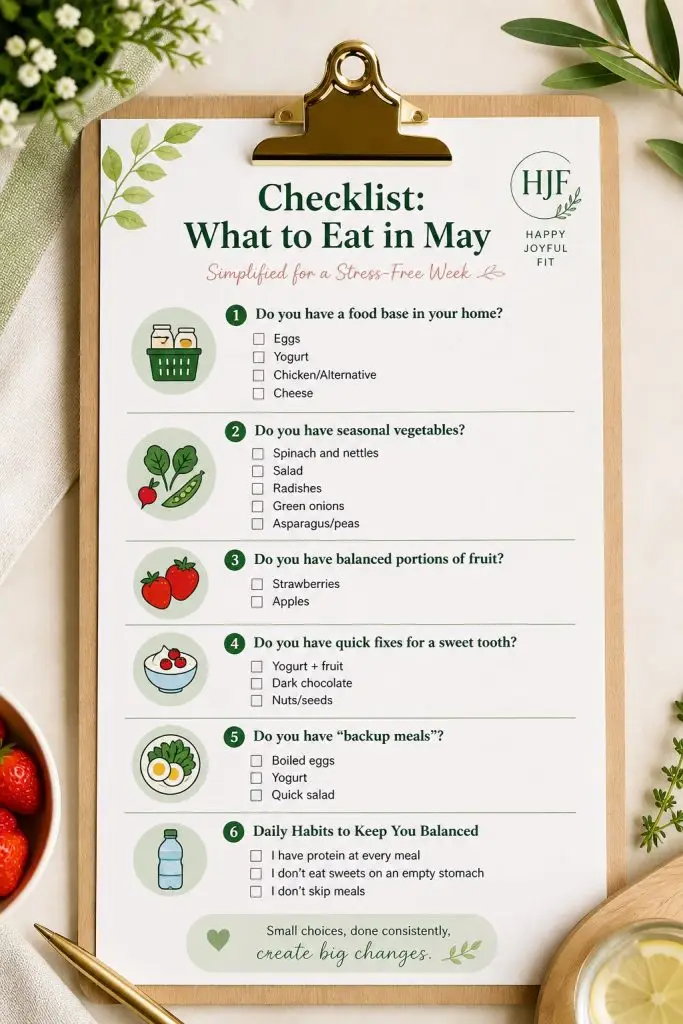
Want to organize your meals more easily and have more energy after 35? We have prepared for you a simple and practical checklist that helps you:
- reduce food chaos
- Plan your meals more easily
- have more energy every day.
Printable format.


You May Also Like

6 Proven Dark Chocolate Benefits
March 10, 2024
What I eat in April
March 31, 2026